

Ordered online from Passion Designer Boutique and choosing to collect in Palmyra? Here is what to know before you come in to Stammers Marketplace.
A cotton cashmere jumper is one of the easiest pieces to live in. It is soft, light enough for a Perth winter, and it goes with almost everything. It also needs a little more thought than a basic cotton tee. The good news is that the care is simple once you know the habits, and none of it needs special equipment. This guide covers washing, drying, storing and the small fixes that keep a good knit looking its best for years.
The pieces we have in mind are blends like the Zaket & Plover knits, where the label reads 95% cotton and 5% cashmere. That mix is mostly cotton with a touch of cashmere for softness, so it behaves a little differently from a pure cashmere knit. Where a general rule applies, we say so. Where your garment’s own care label says something different, follow the label.
What does a 95% cotton 5% cashmere blend actually need?
A 95% cotton and 5% cashmere blend needs gentle handling more than anything else: cool water, mild detergent and no wringing. The cashmere is a small share of the yarn, but it is the part that gives the soft feel, and it is the part that suffers from heat and rough treatment.
Because the blend is mostly cotton, it is generally sturdier than pure cashmere and less fussy about frequent wear. Cotton, though, is heavy when wet, and a wet knit stretches under its own weight. That is the main way a good jumper loses its shape at home, not the wash itself but the way it is lifted, hung or squeezed while it is soaked.
As a rule of thumb, treat it like fine knitwear rather than a T-shirt. Check the care label first, since a maker’s instructions outrank any general advice. Labels differ from style to style, and the label is the one source that knows exactly how your garment was finished.
How often should you wash it?
Wash less often than you think you need to. Knitwear that sits over a layer, such as a cami or a fitted tee, usually only needs washing after several wears, unless you have spilled something or it has picked up smells.
Between washes, air the jumper. Lay it flat or hang it over a chair back near an open window for a few hours, out of direct sun. Fresh air does a lot of the work that a wash would do, and it spares the fibres the friction of the machine or your hands.
A few habits help it last longer between washes:
- Wear a light layer underneath, so skin oils and perfume stay off the knit.
- Spot clean small marks straight away with a damp cloth and a tiny drop of mild detergent, dabbing rather than rubbing.
- Rotate two or three knits through the week rather than wearing one every day, so the fibres can relax and recover.
Rubbing a mark is the classic mistake. It pushes the stain into the yarn and roughens the surface, which then pills.
How do you hand wash cotton cashmere knitwear?
To hand wash cotton cashmere, fill a clean basin with cool water, add a small amount of mild detergent made for wool or delicates, and press the jumper under the water gently for a few minutes. Cool is the key word, since heat can shrink and harden the fibres.
Turn the garment inside out first, especially if it has a pattern. A style with intarsia work, where the design is knitted in blocks of colour like the hearts on the Intarsia Hearts Jumper, is best washed on its own so the colours cannot rub against other clothes. Test an unfamiliar bright shade by pressing a damp white cloth against an inside seam. If colour transfers, wash that piece alone and keep the soak short.
Do not twist, wring or scrub. Let the water do the work, then drain the basin and refill it with cool, clean water to rinse. Repeat until the water runs clear. Lift the jumper out supported underneath with both hands, bundled up, never dangling from the shoulders.
Can you put it in the washing machine?
Sometimes, but only if the care label allows it. If it does, use the delicate or wool cycle with cold water, a low spin and a mesh laundry bag, and wash the knit alone or with other soft items.
Machines cause trouble in three ways. Hot water shrinks. A fast spin stretches the knit and can leave wrinkled creases that are hard to remove. And zips, buttons and hooks on other clothes snag the yarn. A cardigan with buttons should be done up before it goes in the bag, so the buttonholes keep their shape.
A fair question to ask yourself is whether the saving in time is worth the risk to a piece you love. For a jumper you wear weekly, many people simply prefer a quick hand wash, because you control the whole process.
Skip the tumble dryer entirely. Tumbling is the fastest way to felt and shrink a knit, and a shrunk jumper cannot be undone.
How should you dry it without losing its shape?
Dry it flat. Press the water out by rolling the jumper in a clean, thick towel and pressing along the roll, then lay it on a dry towel or a mesh drying rack, shaped back to its original size.
Hanging a wet knit on a line or a coat hanger pulls the shoulders long and leaves peaks at the hanger ends. Western Australian sun is strong, too, and direct summer or even clear winter sun can fade colour and stiffen the fibres. Choose a shaded, airy spot, such as a covered patio or a spare room with the window open.
While it dries, ease the cuffs, hem and neckline into place with your hands, and smooth out the sleeves. Turn it over once the top side feels dry so the underside dries evenly. Depending on the weather, expect it to take a good part of a day. Resist the temptation to speed it up with a hairdryer or a heater, as direct heat undoes the careful washing you just did.
How do you store knitwear between seasons?
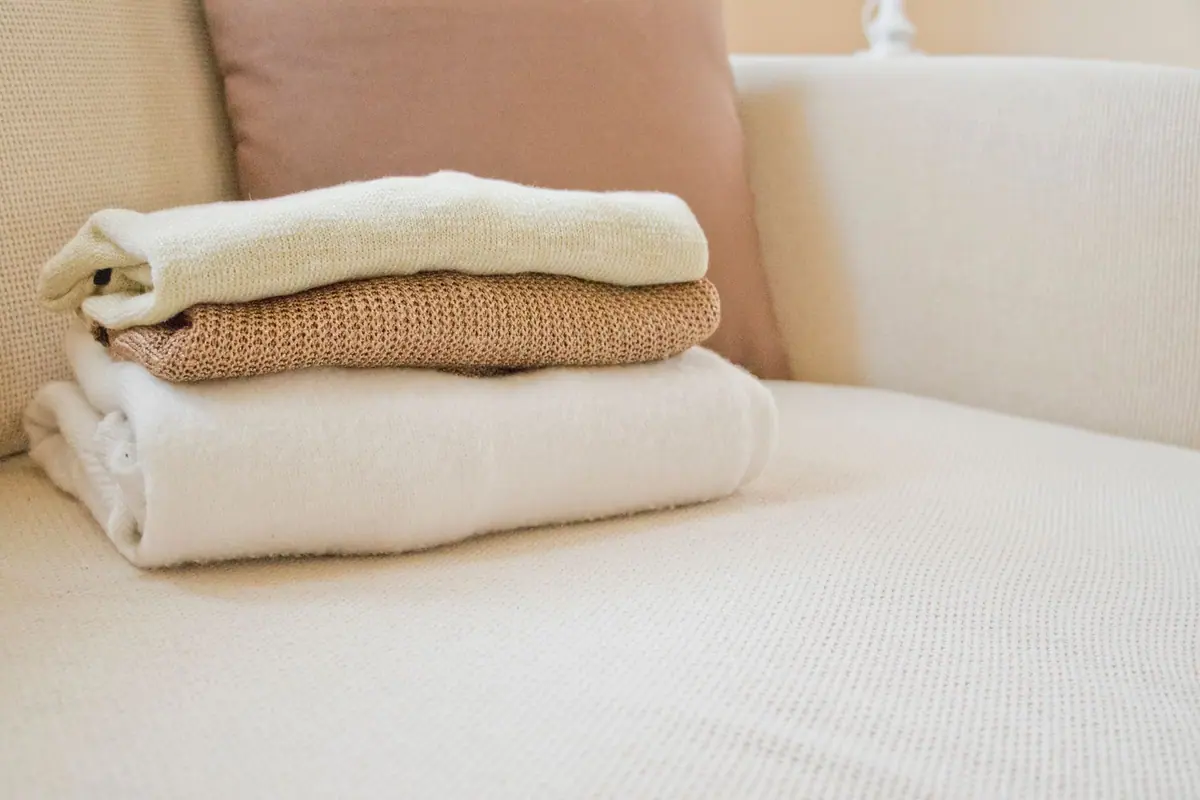
Fold it, never hang it. A folded jumper keeps its shoulders and sleeves in shape, while a hung one slowly stretches under its own weight.
Make sure every piece is clean before it goes away for the warmer months, because body oils and food marks that you cannot see can attract moths and set into stains over time. Store knits in a breathable cotton bag or a drawer, rather than sealed plastic, which can trap moisture. A few cedar blocks or lavender sachets are a common way to deter moths, though they are no substitute for clean, dry storage.
When you stack, put the heavier pieces at the bottom and keep chunky knits away from fine ones. If you have a mix of styles, such as a cardigan in the winter range and a lighter cotton V neck, refold them once or twice through the season so creases do not set in the same place.
What about pilling, snags and small repairs?
Pilling is normal on soft knitwear, especially under the arms and where a handbag strap rubs, and it is easy to manage. Remove the little balls with a fabric shaver or a pilling comb, working lightly on a flat surface, rather than pulling them off with your fingers, which can drag the yarn.
Snags need a different approach. If a thread pulls out, never cut it. Use a fine crochet hook, or even a pin, to ease the loop back through to the inside of the garment, and then gently stretch the surrounding fabric to even it out. Cutting a snag can leave a hole that unravels.
For a loose button or a seam that is starting to open, a quick stitch with matching thread is worth doing straight away. Small problems grow quickly once a knit is worn and washed again.
If a piece has a more serious problem, such as a hole, an accident with an iron or a stain that will not shift, take it to a good dry cleaner or repairer and show them the label. Do not try home remedies on a stain you do not understand.
Ready to choose a piece you will keep?
A knit that is simple to look after is a good one to own. If you like the idea of a soft, mostly cotton blend, the Zaket & Plover Intarsia Hearts Jumper in Chambray is a good example. It is 95% cotton and 5% cashmere, priced at $159, and listed in sizes from XS up to 3XL. Care for it the way this guide describes and it should give you many winters of wear.
If you would like to talk through a fabric or a care question in person, Nancy and Julie are happy to help in the shop at Stammers Shopping Centre on Canning Highway, Palmyra. Our hours can vary slightly, so it is best to call on (08) 9316 1699 first, or use our contact page. You can also order online and pick up in store, or have it shipped.
Frequently asked questions
Is cotton cashmere warm enough for a Perth winter?
Our Zaket & Plover cotton cashmere knits are listed in our winter category, and a mostly cotton blend is a lighter, breathable weight that suits layering. If you are unsure how warm a particular style will be, ask Nancy or Julie in the shop.
Can I iron a cotton cashmere jumper?
Check the care label first. If ironing is allowed, a general rule is to use a low heat setting with a clean cloth between the iron and the knit. Often, simply reshaping the jumper while it dries flat leaves it smooth enough that no ironing is needed.
Will it shrink if I wash it once by accident on a warm cycle?
It may. Warm water and a fast spin are the usual causes of shrinkage in knitwear. If it happens, lay it flat and ease it gently back to size while damp, but do not stretch it hard, as that can distort the stitches.
Does the same care apply to the 100% cotton knits?
Largely yes, as gentle, cool washing and flat drying suit most knitwear. A piece such as the Hearts On My Sleeve Jumper is listed as 100% cotton, so always follow its own label for the exact instructions.
Related pages
This article draws on the following pages.